
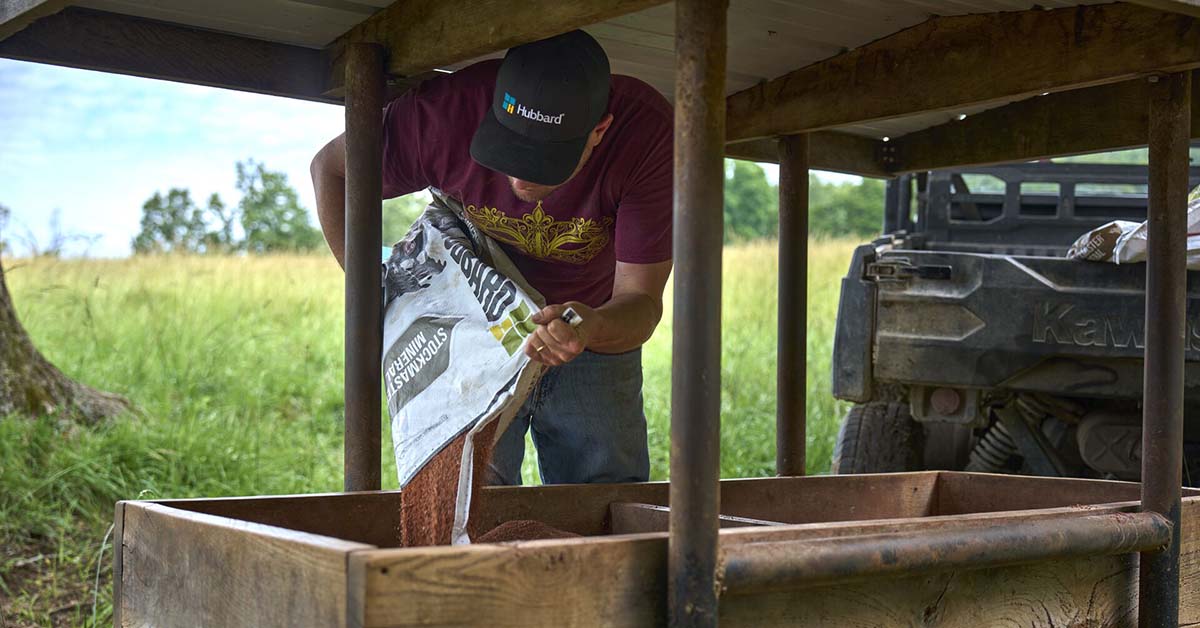
Match your mineral program to your cattle, forage and production goals to support performance and make your nutrition investment count
A mineral tag tells you what is in the bag. But building an effective mineral program takes more than comparing nutrient concentrations or keeping a feeder full. It takes understanding what your cattle need, what their diet provides and how much mineral your animals actually consume.
Mineral supplementation should be an active part of your nutrition management. As forage conditions and production demands change, your mineral program may need to change with them.
Here are five considerations to help you evaluate your program.
1. Small amounts serve important functions
The macro minerals of calcium, phosphorus and magnesium often get attention when producers review mineral tags. But trace minerals — including cobalt, copper, iodine, manganese, selenium and zinc — also serve essential functions in cattle.
Although cattle need these nutrients in much smaller amounts, they support processes involved in growth, reproduction and immune function. Cattle operations that overlook trace mineral supplantation needs can leave a gap even when other nutritional needs are being met.
The goal is balance: Supplying the macro and trace minerals in the appropriate amounts and within the proper ratios is one of the most important parts of an effective mineral supplementation program.
2. Match the program to the cattle and their conditions
Your cattle’s nutritional needs change with their stage of production and level of performance. A lactating cow, for example, has different demands than a dry cow. Genetics influence production potential, while forage, management and environmental conditions affect how much of that potential cattle can achieve.
As forage quality and availability change, so does the nutrition supplied by the diet. A mineral program should help fill those gaps and adapt as conditions change.
Forage and water also can contain minerals that interfere with the availability of other nutrients. That makes it important to evaluate the whole feeding situation rather than selecting a mineral in isolation.
Work with your nutritionist to review your forage, water, feeding program and production goals, particularly as cattle move into a different production stage or forage conditions change.
3. Consider mineral source as well as concentration
The amount of mineral listed on the tag is only part of the picture. Its source also can affect how readily the animal can absorb and use it and that is called the bioavailability of the mineral.
Mineral supplements may contain inorganic sources, organic sources or a combination of both. Differences in availability depend on the mineral, its specific form and conditions within the diet. In general, chelated trace minerals are much more bioavailable than trace minerals from inorganic sources (oxides, sulfates, etc.) There are also differences within sources of chelated trace minerals that can affect both the gut absorption and the cellular metabolism of a trace mineral. Communicating with your nutritionist will help you sort through and select the best mineral supplement for your operation.
This means choosing a mineral program requires more than looking for the highest concentrations or the lowest price per bag. Your nutritionist can help evaluate mineral sources in the context of your operation and determine where an investment in different sources may provide value.
4. Check actual intake against the target
Even a well-formulated mineral cannot deliver its intended benefits if cattle do not consume the recommended amount. Too little can leave nutritional gaps; too much can add unnecessary expense.
Feeding directions are printed on all mineral supplement tags and include the expected daily intake of the supplement. It is important to then track how much mineral your herd consumes over time. Daily intakes can fluctuate, therefore, look for patterns rather than relying on a single day’s observation to make changes that correct desired supplement intakes.
Remember: As calves grow the learn from the dams to consume available mineral supplement and this should be accounted for when monitoring supplement intake. Their consumption increases the amount needed for the group and can affect your estimate of intake per cow.
If consumption consistently falls above or below the intended range, work with your nutritionist to identify the cause and make appropriate adjustments.
5. Aim for balance, then evaluate the return
A mineral deficiency can limit an animal’s ability to perform, even when other parts of the diet are adequate. Correcting a deficiency can help cattle make better use of the nutrition available to them. But supplying more than they need can add cost without improving performance.
Minerals also interact with one another. Sulfur, molybdenum and iron, for example, can interfere with copper availability. That is why an effective program considers the overall diet and the balance among nutrients, not just the amounts listed on the tag.
Evaluate your mineral investment alongside measures that matter to your operation, such as reproductive performance, calf health and weaning weights. Those outcomes are influenced by many factors, so mineral nutrition should be considered as one part of the broader management program.
Put your mineral program to work for you
An effective mineral program evolves with your herd. Reviewing intake, changing forage conditions and production demands can help you identify gaps, reduce unnecessary inputs and support your cattle’s performance. Are your cattle getting what they need from your current mineral program? Your Hubbard representative and beef nutrition team can help you evaluate your program and select mineral options that fit your cattle, your resources and your goals.
- Log in to post comments